Lash fill guide: What it is and isn't
By Kiss János 14 min read
What exactly is a lash fill
Most people book a lash fill based on the calendar.
That’s the first mistake.
A fill depends on what’s still on your lashes, not on how many days have passed.
A lash fill is a maintenance service that replaces eyelash extensions lost to natural shedding. Your artist keeps the extensions that are still securely attached, removes any grown-out ones, and applies new extensions to fresh natural lashes and gaps.
It is not a brand-new application, and it shouldn’t be priced or timed like one.
Here’s where the confusion usually starts.
A fill assumes a decent base of existing extensions remains. A full set eyelash extensions appointment starts from bare natural lashes and builds the entire look from scratch, usually over two hours or more.
Think of it like a hedge.
A fill is a trim and touch-up on a hedge that’s mostly intact. A full set is planting the whole row again.
Show up with three sparse branches and ask for a trim, and the result will look patchy no matter how skilled the gardener is.
That’s the core idea behind this guide.
The right service depends on three things: remaining coverage, natural lash health, and where your lashes are in their growth cycle.
The date on your last receipt is a rough hint at best.
Get those three factors right and you’ll book the correct service, pay a fair price, and protect the lashes you were born with.
Get them wrong and you risk a rushed appointment, an awkward reschedule, or extensions clinging to lashes that should have been left alone.
Fill, full set or removal?
Studios don’t decide your service by counting days.
They look at your eyes.
Remaining coverage percentage, natural lash health, and the growth stage of your lashes determine whether you need a regular fill, an extended fill, a foreign fill, or a full set with removal.
Many studios use a coverage threshold as a starting point. A common benchmark in 2026 is that roughly 40 to 50 percent of your extensions should still be attached for a fill to make sense.
Below that, the artist is essentially rebuilding a set at fill pricing and fill timing, which doesn’t work for anyone.
- Regular fill: You return within the studio’s standard window with healthy coverage, and the artist tops up gaps and replaces grown-out extensions.
- Extended fill: You’ve returned later than usual with moderate shedding, so the appointment needs more time and often costs more.
- Foreign fill: A new artist works on extensions applied at another studio, which brings extra assessment and sometimes a removal first.
- Full set or removal: Coverage is too low, or the existing extensions are damaged, twisted, or poorly bonded, so starting fresh is the safer route.
Regular vs extended fill
The difference between these two is mostly about volume of work.
Same service category, different workload.
- A regular fill usually happens within two to three weeks of your last appointment, when the majority of your extensions are still in place and only a moderate number of lashes need replacing.
- An extended fill covers clients who return outside the studio’s normal fill window, often at three and a half to four weeks, with noticeable but not severe shedding.
- Appointment length grows with the extended version, because the artist removes more grown-out extensions and re-applies more lashes, sometimes adding 15 to 30 minutes.
- Pricing for extended fills is often a separate tier on the menu, sitting somewhere between a regular fill and a full set.
What a foreign fill requires
A foreign fill means a new artist is filling extensions that someone else applied.
That sounds simple.
It often isn’t, because the new artist doesn’t know the adhesive, the lash mapping, or the quality of the original work.
- Photos beforehand: Many studios ask for clear, close-up photos of your current lashes before confirming the booking, so the artist can judge whether a fill is realistic.
- Extra appointment time: Expect a longer slot, since the artist needs to assess bonding, match curl and length where possible, and fix inconsistencies.
- Possible removal: If the existing work shows clumped lashes, heavy extensions on weak naturals, or excess adhesive, the artist may insist on starting with a removal.
- Different pricing: Foreign fills are frequently priced higher than standard fills, or quoted only after assessment, because the scope is unpredictable.
When removal or a full set is safer
Sometimes the most responsible answer from your artist is “not today.” A fill on a compromised base doesn’t last, and it can put extra strain on your natural lashes.
Signs you need removal first
- Overgrown extensions that sit far from the lid, flop downward, or point in odd directions as the natural lash grows out.
- Twisted or tangled lashes where several extensions are stuck together, which can tug on multiple natural lashes at once.
- Poorly bonded extensions with visible adhesive blobs, extensions attached to the skin, or lashes glued to neighbours.
- Irritation around the lash line, including redness or itching, that needs to settle before any new product goes near the eye.
Signs you’re ready for a full set
- Too few extensions left to fill, typically under 40 percent coverage, where most of the look would need rebuilding anyway.
- A style change, such as moving from classic to volume or changing curl and length significantly, which works better from a clean base.
- A long break of five weeks or more since your last service, by which point most original extensions have shed or grown out.
- A fresh start after removal, once the lash line looks calm and your natural lashes are in good condition.
How often you really need one
Your lashes don’t shed on a schedule.
They shed one at a time, constantly, each on its own timeline.
That single fact explains why fill timing varies so much from person to person.
The natural lash growth cycle has three phases.
In the anagen (growth) phase, which lasts roughly 30 to 45 days, a lash actively grows. Then comes the catagen (transition) phase of about two to three weeks, followed by the telogen (resting) phase, which can last several months before the lash falls out and a new one starts.
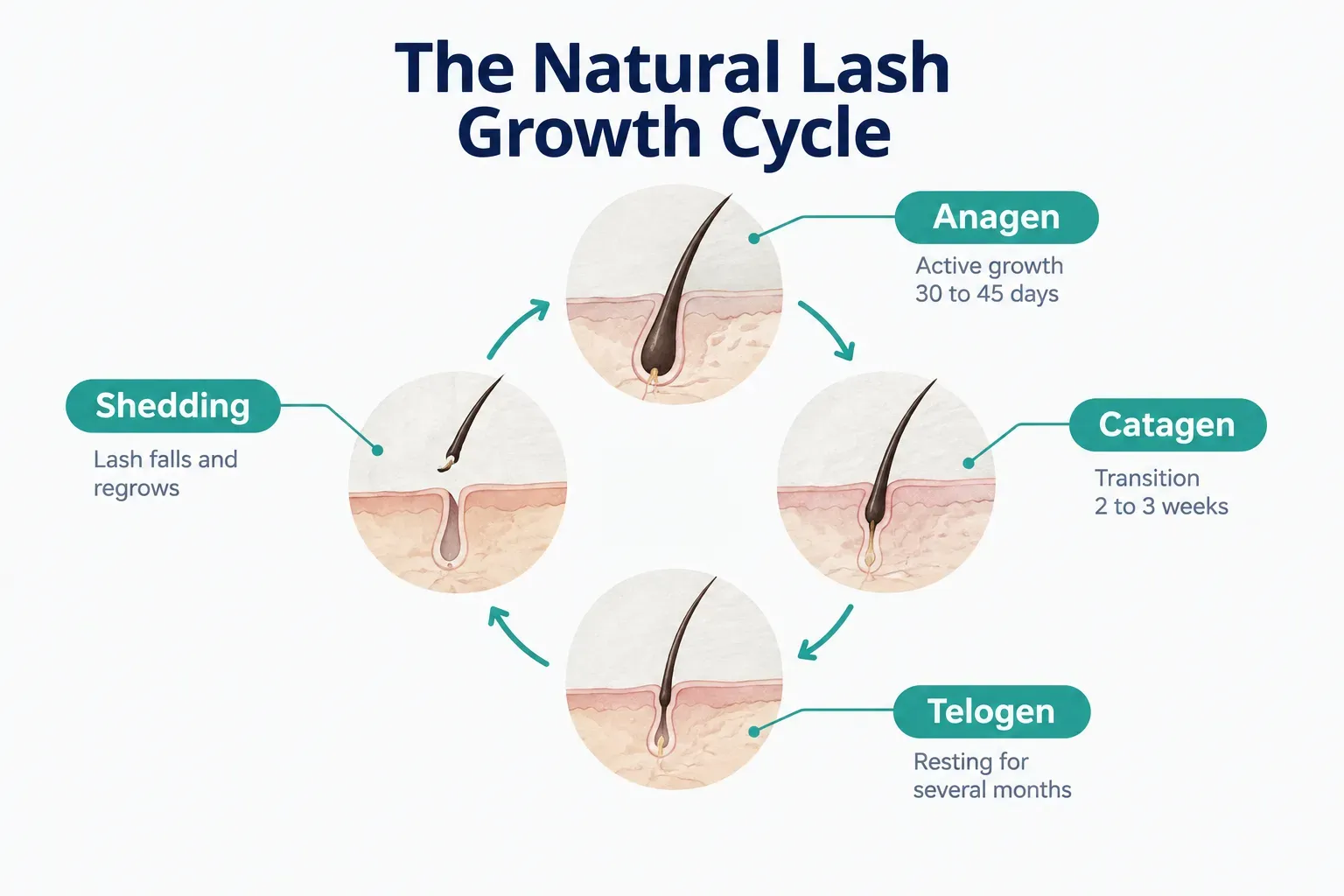
Because every lash sits at a different stage, most people naturally lose a few lashes per eye each day. When a natural lash falls, its extension goes with it.
This is the lash extension shedding cycle, and it’s completely normal.
It’s also why even perfect application won’t last forever.
A fill isn’t fixing a failure. It’s keeping pace with biology.
What determines your fill window
Two clients can leave the same artist on the same day with identical sets.
One needs a fill at two weeks. The other looks great at three and a half.
Why?
Lash retention is the biggest variable.
Retention depends partly on the artist’s technique and adhesive choice, and partly on how the client treats the set at home. Humidity in the studio, skin oiliness, and how well the lashes were prepped all play a role.
Aftercare habits matter just as much.
Regular lash cleansing with a lash-safe foam removes oil and debris that weaken bonds. Skipping it lets buildup collect at the base, which shortens retention and can irritate the lid.
Oil-based products are a well-known culprit.
Oil cleansers, rich eye creams, and some makeup removers break down cyanoacrylate adhesive over time. Even a nightly oil cleanser can noticeably shorten the life of a set.
Then there are the small physical habits. Sleeping face-down or on one side crushes extensions against the pillow. Rubbing your eyes, pulling at loose lashes, or wearing mascara on extensions all speed up fallout.
Each habit alone seems minor.
Together, they can cut a fill window by a week.
Classic, hybrid and volume maintenance
The style of set you wear changes how shedding looks and how often you’ll want a refill.
Here’s the plain-language version.
A classic lash fill maintains a set where one extension is applied to one natural lash. Gaps show more quickly because each lost lash leaves a visible hole.
Many classic clients book fills every two to three weeks.
A hybrid lash fill maintains a mix of classic extensions and lightweight fans. The blend hides small gaps better, so some hybrid clients stretch closer to three weeks.
A volume lash fill maintains multiple ultra-fine extensions per natural lash, creating a dense look where each shed fan leaves a noticeable gap, so volume clients often return every two to three weeks to keep fullness consistent.
Treat all of these as guidance, not rules.
Timing advice is studio-specific and artist-specific, shaped by their products, techniques, and policies. Your own artist, who has seen how your lashes hold up, will give you a more accurate window than any general chart.
Inside a typical fill appointment
A smooth fill starts well before you lie down on the bed. Most of what makes a fill fast and long-lasting happens in the 24 hours before you arrive.
Most appointments run roughly 45 to 90 minutes, depending on how much fullness needs restoring and whether you wear classic, hybrid, or volume lashes.
Before you arrive
- Arrive with clean, mascara-free lashes. Cleanse your lashes the night before or the morning of, so your artist doesn’t spend paid time removing makeup and oil from the base.
- Skip waterproof makeup entirely. Waterproof mascara and liner leave stubborn residue that interferes with bonding and can shorten retention on the new extensions.
- Remove contacts if your eyes are sensitive. Your eyes stay closed for the full service, and some clients with contacts find this dry and uncomfortable, so bring glasses and your lens case.
- Disclose allergies or recent eye irritation. Tell your artist about any reaction to adhesive, any recent redness or itching, or any diagnosed eye condition, so they can adjust products or postpone if needed.
- Mention recent lash or brow treatments in advance. A lash lift, tint, or brow lamination in the past few weeks can change how lashes sit and how adhesive bonds, and telling the studio ahead of time helps the artist plan bonding correctly.
During the service
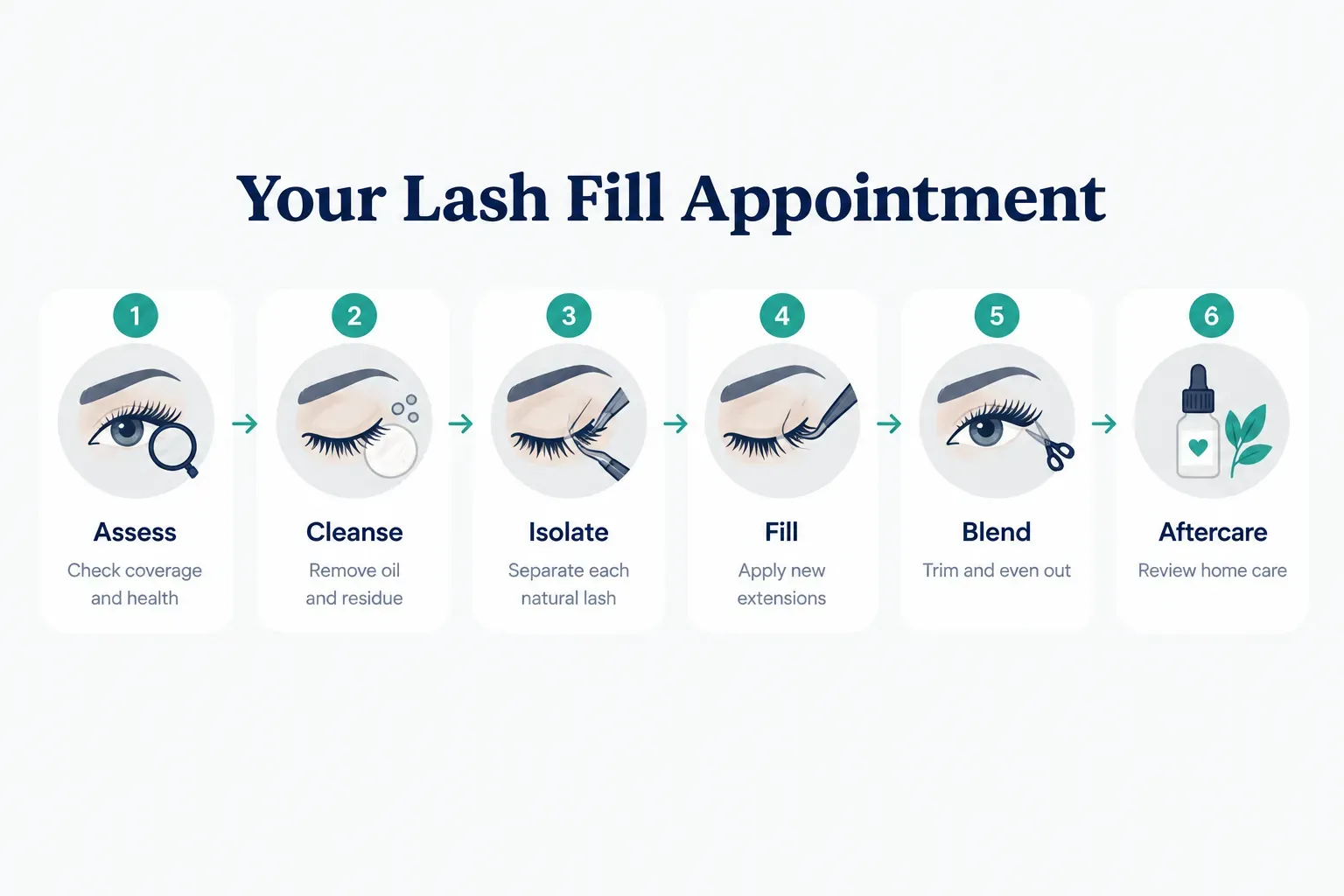
- Consultation and lash assessment. Your artist checks coverage, looks for grown-out or twisted extensions, and confirms whether a regular fill is still the right service or whether something else is needed.
- Cleansing. The lashes are cleaned again with a lash-safe cleanser and primed, removing any oil or residue so the new adhesive bonds properly.
- Isolation. Using fine tweezers, the artist separates one natural lash from its neighbours, which keeps extensions from sticking together and protects natural lash health.
- Filling gaps. New extensions go onto bare or newly grown natural lashes, following your original lash mapping so length, curl, and shape stay consistent.
- Trimming and blending. Grown-out extensions are removed, and the artist checks that new and existing lashes blend smoothly from inner to outer corner.
- Aftercare review. Before you leave, the artist reminds you how long to keep lashes dry, which products to avoid, and roughly when to book your next fill.
When to pause and get help
Losing a few lashes every day is fine.
Losing them in clumps, alongside itchy, puffy lids, is not.
Knowing the difference keeps a minor issue from becoming a medical one.
Normal shedding vs a real problem
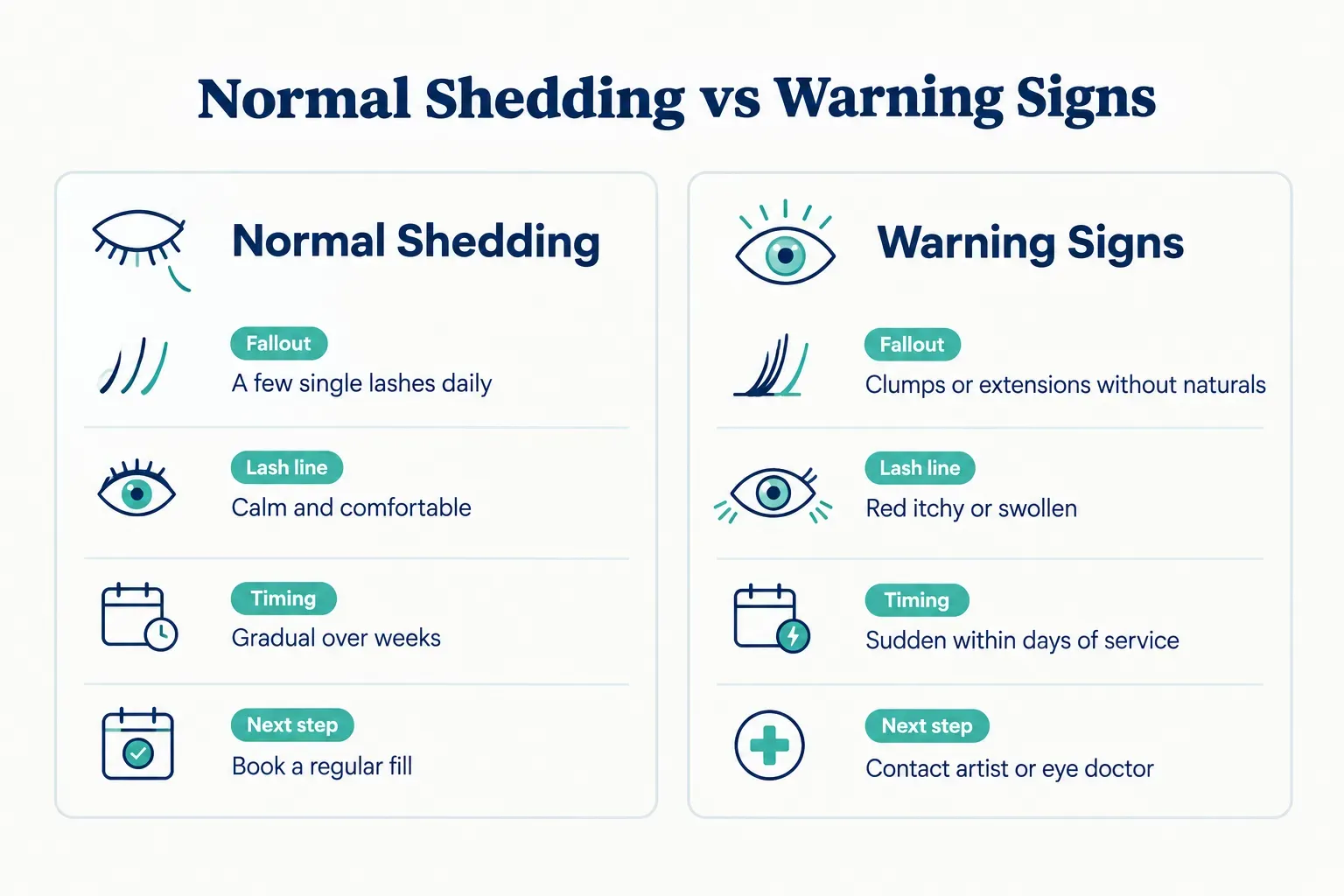
Normal shedding looks like single extensions falling out with a natural lash attached, usually a few per eye per day. You’ll notice them on your pillow or cheek.
The lash line stays calm, and nothing hurts.
A real problem looks different.
Extensions falling out without a natural lash attached point to adhesive failure, often caused by humidity, oil exposure, poor prep, or an expired adhesive. Your artist can usually fix this at the next appointment by adjusting products or technique.
Signs of an allergic reaction are another matter.
Itching, redness, swelling, burning, pain, or excessive fallout in clumps can indicate a reaction to the adhesive, which typically contains cyanoacrylate. Reactions often appear within 24 to 48 hours after a service, though some people develop sensitivity after many uneventful appointments.
Red flags needing medical care
Your lash artist can review retention issues, uneven shedding, or mild discomfort from a poorly placed extension. They can also safely remove extensions if a reaction is starting.
What they can’t do is diagnose or treat an eye condition.
See an optometrist, ophthalmologist, or doctor if you notice any of the following:
- Corneal irritation, such as a gritty, scratchy feeling, light sensitivity, or blurred vision, which can happen if adhesive fumes or a stray extension affects the eye surface.
- Infection-like symptoms, including discharge, crusting, a bump on the lid, or pain that worsens over a day or two.
- Swelling that spreads beyond the lash line, or lids so puffy they’re difficult to open.
- Persistent redness and itching that may point to allergic blepharitis (inflammation of the lid margin) or contact dermatitis on the surrounding skin.
Eye irritation that lingers isn’t something to push through.
And a fill should never go on top of a reaction that hasn’t been assessed.
This leads to a broader point.
Fills should never be used to repeatedly mask unhealthy natural lashes. If your naturals are thinning, breaking, or growing in sparse, a good artist will pause and check lash health before adding more weight.
Sometimes the right call is lighter extensions, a longer gap between sets, or a full break… even if that isn’t what you came in hoping to hear.
Clear booking info prevents mismatches
A surprising number of lash problems start at the booking stage.
A client books a regular fill at five weeks, or books a fill for work done at another studio, and nobody finds out until the appointment starts. The artist then has to downgrade, upgrade, or reschedule on the spot.
Good systems catch this early.
A short appointment intake form can ask when your last service was, where it was done, and whether you’ve had any reactions. Confirmation messages can restate the studio’s fill policy, such as minimum coverage or the maximum number of days for a regular fill.
Booking apps like Frendex build these steps into online booking, so foreign-fill or overdue status gets flagged before the appointment rather than during it. Automated appointment reminders can also prompt clients to book within their fill window, which means fewer surprise extended fills and fewer awkward conversations at the chair.
Your next step
Before you book, take a close look in the mirror.
Honestly assess how much coverage remains and how your natural lashes look underneath. If you’re unsure whether you need a regular fill, an extended fill, or a fresh start, ask the studio and send a photo.
That small step pays off.
Choosing the right service protects your natural lash health and gives your artist the time they actually need. It also means your next appointment starts with a plan, not a surprise.
Studios can help too.
Clear service descriptions, a quick intake form, and automated reminders make it far easier for clients to pick the correct option. When both sides have the right information, the booking gets done right the first time.
Your lashes will thank you.
Frequently asked questions
How much does a lash fill cost?
A lash fill typically costs between $50 and $150 in the US as of 2026. Classic fills usually sit at the lower end, while hybrid and volume fills cost more because they take longer and use more product. Pricing varies widely by studio, artist experience, lash style, and location, with major cities often charging above this range.
How long does a lash fill last?
A lash fill lasts until enough natural lashes shed to leave visible gaps, usually two to four weeks. The timing ties to your natural lash growth cycle rather than a fixed number of days. Strong retention and good aftercare stretch that window, while oil-based products and rubbing shorten it.
How often should I get eyelash extensions filled?
Most artists recommend a fill every two to three weeks. Some suggest a tighter two-week window for clients with fast shedding or volume sets, so the look never goes patchy. Others allow a looser three-week window for clients with excellent retention or classic and hybrid styles that hide gaps well.
What is the difference between a 2 week fill and a 3 week fill?
A 3-week fill involves more regrowth and more missing extensions than a 2-week fill. At two weeks, the artist mostly tops up gaps, so the appointment is shorter and often cheaper. At three weeks, more extensions have grown out and need removing, so the appointment usually runs 15 to 30 minutes longer and many studios charge a higher tier.
Can I get a lash fill after 4 weeks?
You can sometimes get a lash fill after 4 weeks, but only if enough extensions remain in good condition. Many studios treat this as an extended fill and require roughly 40 to 50 percent coverage. If extensions are overgrown, twisted, or too sparse, removal or a full set becomes the safer and necessary option.
Do lash fills damage your natural lashes?
Lash fills do not damage natural lashes when they're applied and removed correctly. Damage comes from poor technique, such as extensions too heavy for the natural lash, sticky clusters, or adhesive on the skin. Picking or pulling extensions off at home is another common cause, because it rips out natural lashes before they're ready to shed.
Need a hand with something?
The Frendex map shows you who is available near you, in real time.
Get the app free Get the app freeFree, no card needed
Related articles

Brow lamination: What it does and how to stay safe
What brow lamination actually does to your hair, the overprocessing signs to watch for, and how to spot a risky technician before you book.

How much does a locksmith cost in 2026?
See what locksmiths actually charge in 2026, trip fees, labor, and parts included. Real job costs and hidden add-ons before you book a call.

What your bumper repair shop isn't telling you
A $200 scratch can hide $2,000 in hidden damage. See what's behind the plastic, what drives repair costs, and how to vet a shop before you pay.