Windshield replacement cost: A 2026 pricing breakdown
By Kiss János 14 min read
Why windshield pricing is so confusing
Ask three shops to quote the same windshield and you can easily get three numbers that differ by $800.
Not a typo.
Same car, same crack, wildly different totals.
Part of the problem is the information online. Most national averages for windshield replacement cost were pulled from surveys that are several years old. They rarely say whether the figure includes camera calibration, a mobile service fee, molding, or sales tax.
A “$350 average” might describe bare glass on a 2012 sedan, while your 2024 SUV needs a heated, acoustic, camera-ready windshield that costs three times as much.
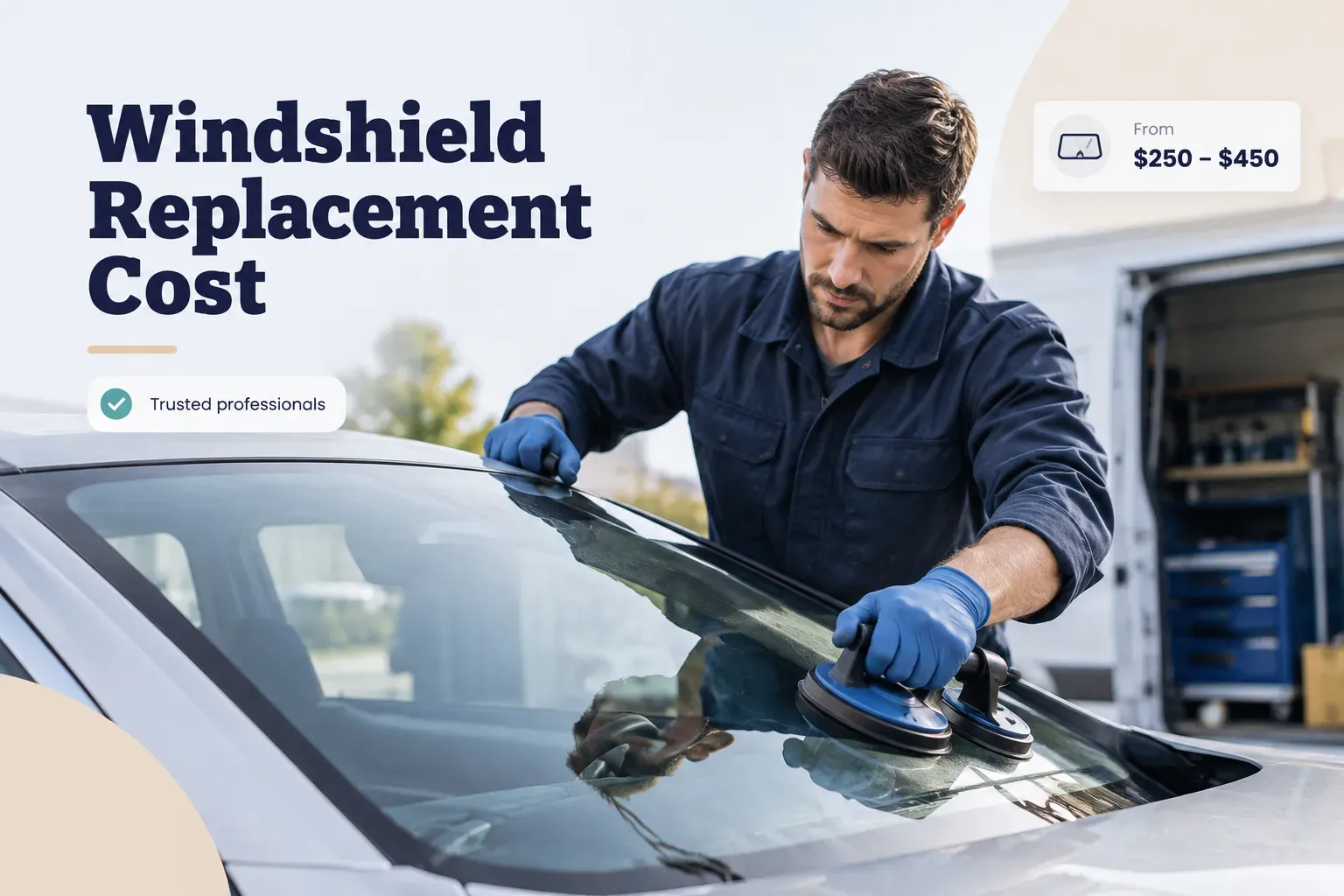
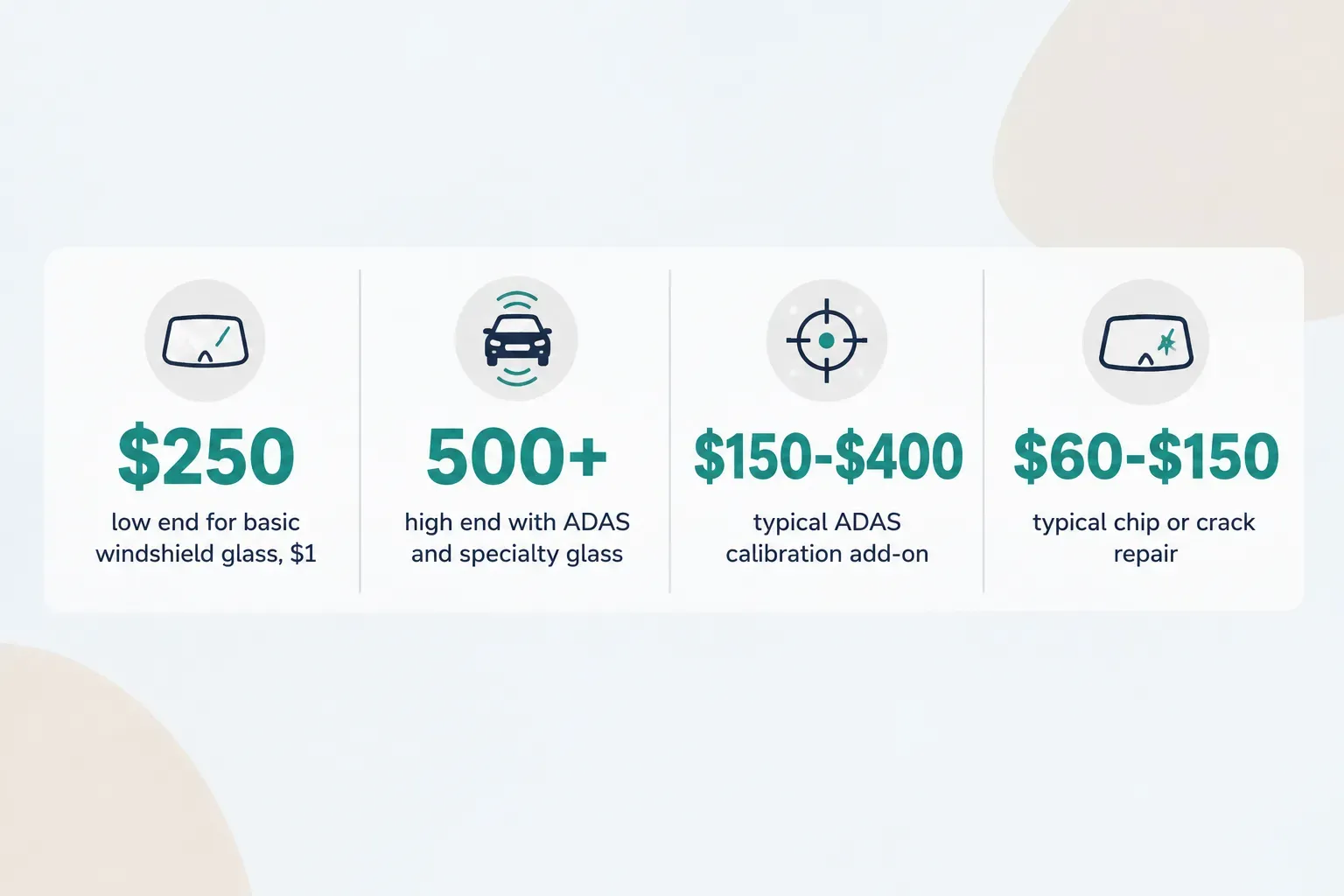
As of 2026, a single vehicle can realistically see quotes from roughly $250 to $1,500 or more. Where you land depends on the glass spec your car requires and whether it has driver-assistance cameras mounted behind the glass.
And because modern auto glass replacement often involves software as much as hardware, the low end keeps shrinking.
The clearest way to understand any quote is to split it into four separate line items that most guides blur together:
Glass price (OEM, OEM-equivalent, or aftermarket), labor (including location and vehicle complexity), calibration (if your car has ADAS), and insurance responsibility (what you actually pay after coverage).
Once you see those four pieces, the wild price swings start making sense.
What actually sets the price
A windshield looks like a simple sheet of glass.
It isn’t.
Modern windshields are laminated safety glass, two layers of glass bonded around a plastic interlayer, and they increasingly carry mounts, sensors, heating elements, and optical coatings that are specific to a single trim level.
That’s why two cars of the same model and year can need completely different windshields.
The part number changes with each option package, and so does the price.
Glass type: OEM vs aftermarket vs dealer
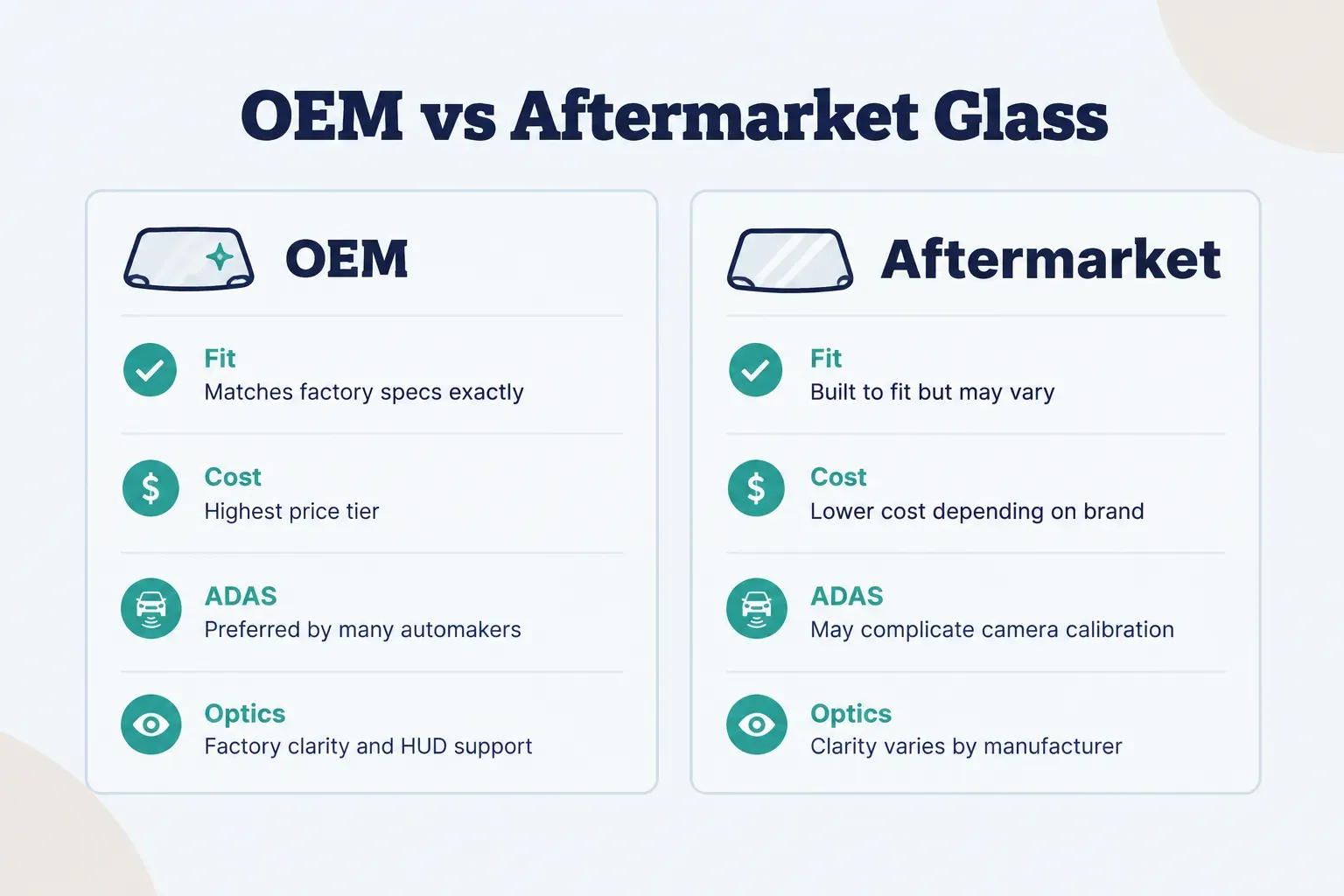
OEM windshield glass is made by the same manufacturer that supplied your automaker at the factory, and it usually carries the carmaker’s logo.
OEM-equivalent glass (sometimes called OEE) is built to the same specifications, occasionally on the same production line, but without the branding.
Aftermarket windshield glass is designed to fit your vehicle, though thickness, curvature, and optical clarity can vary from the original.
Here’s the catch.
“Fits the frame” and “works with your car” are not the same thing.
A camera bracket that sits a few millimeters off, or a rain sensor mount bonded at a slightly different angle, can create calibration headaches or sensor faults later.
Several features determine which glass is truly compatible:
Camera brackets must hold the forward-facing camera at a precise position and angle.
Acoustic interlayers use a special sound-damping vinyl layer to cut road and wind noise.
Tint bands (the shaded strip across the top) vary in shade and depth by model.
A head-up display requires a wedge-shaped interlayer that prevents a ghosted double image, and standard glass simply won’t project cleanly.
Rain-sensor mounts need a clear optical zone with a specific gel pad or bracket.
Dealer glass sits at the top of the price range.
You’re usually paying for OEM glass plus dealership labor rates, which can run 20 to 40 percent above independent shops. Several automakers have also published position statements recommending OEM glass for vehicles with driver-assistance systems, which some insurers and shops follow.
ADAS calibration explained
ADAS stands for advanced driver-assistance systems. In plain terms, it’s the set of safety features that watch the road for you: lane departure warning and lane-keep assist, automatic emergency braking, and adaptive cruise control.
On most vehicles built since roughly 2018, the main camera for these systems is mounted to the inside of the windshield, right behind the rearview mirror.
When the glass comes out, so does the camera.
Even a one-degree misalignment shifts the camera’s aim by nearly two feet at 100 feet away.
That’s enough to make lane-keep assist steer toward the shoulder or delay emergency braking at exactly the wrong moment.
So after replacement, the camera has to be recalibrated. ADAS calibration comes in two forms:
Static calibration happens in a shop bay.
Technicians place printed targets at exact distances from the vehicle on a level floor with controlled lighting, then use a scan tool to align the camera. It typically takes one to two hours.
Dynamic calibration happens on the road.
A technician connects a scan tool and drives at set speeds on well-marked roads until the camera “learns” its position, usually 20 to 60 minutes, though rain, faded lane lines, or heavy traffic can stretch that out.
Some vehicles require both methods, which is why calibration alone often adds $150 to $400 to the bill.
Labor, location and vehicle complexity
Labor is where geography shows up.
Shops in high-cost metro areas commonly charge more per hour than rural installers, and a straightforward install that runs $100 in labor in one region can cost nearly double in another.
Vehicle features push the job toward the high end fast.
A head-up display, a heated wiper park area (the grid of heating wires at the bottom of the glass), a rain sensor, acoustic windshield glass, and light sensors for automatic headlights each add cost to the glass itself.
Luxury brands and many EVs use large, heavily curved, or panoramic windshields that require two technicians and specialty handling equipment.
Then there’s convenience.
Many shops include mobile service at no charge, but some add a surcharge of roughly $25 to $75, especially for remote locations or same-day requests.
If your car needs static calibration, the “mobile” job may still end with a trip to the shop.
Repair or full replacement?
The cheapest windshield replacement is the one you don’t need.
A large share of chip damage can be fixed with resin injection in under an hour, and many insurers waive the deductible for repairs entirely because it saves them money too.
Use these guidelines to figure out which side of the line your damage falls on:
- Small chips are usually repairable. A chip smaller than a quarter (about one inch across) and a crack shorter than three inches can typically be filled with resin, as long as it sits outside the driver’s direct line of sight.
- Damage in your sightline changes the answer. Even a well-done windshield chip repair leaves slight distortion, so many technicians won’t repair damage directly in front of the driver, where it could blur vision or catch glare.
- Edge damage usually means replacement. Cracks that start within about two inches of the edge, or that reach the perimeter, weaken the bond between the glass and the frame. That bond matters for roof strength in a rollover and for airbag support in a frontal crash.
- Damage over sensors forces replacement. A chip in the camera’s viewing area or over the rain sensor can distort what the system sees, and repair resin can’t restore that optical clarity reliably.
- Spreading cracks can’t wait. Temperature cycling is the enemy here. Blasting the defroster on a freezing morning, parking in direct summer sun, or hitting a pothole can turn a two-inch crack into a twelve-inch one overnight.
- Repair is almost always cheaper and faster. When damage qualifies, a repair typically costs $60 to $150 out of pocket and takes 30 to 60 minutes, compared with hundreds of dollars and several hours for a full replacement.
The practical takeaway?
If you spot a chip, get it looked at within days, not weeks.
Cover it with clear tape to keep dirt and moisture out until a technician can fill it.
Insurance and your real out-of-pocket number
Your quote is not your cost.
What you actually pay depends on your policy type, your deductible, and, surprisingly often, the state you live in.
Comprehensive, collision and full-glass coverage
Comprehensive coverage is the part of an auto policy that pays for glass damage from road debris, hail, falling branches, vandalism, and other non-collision events. If a gravel truck flings a rock into your windshield on the highway, this is the coverage that applies.
Collision coverage handles damage from hitting another vehicle or object. If your windshield breaks during a crash, the glass usually gets folded into the collision claim instead.
And people often say they have “full coverage,” but that’s an informal phrase, not a policy type. It usually means you carry both comprehensive and collision.
Some insurers also offer a full-glass endorsement, sometimes called zero-deductible glass coverage.
For a small added premium, it eliminates your deductible for glass repair and replacement. It’s worth asking about if you drive long highway commutes or live somewhere with frequent hail.
State law can change the math entirely.
Florida, Kentucky, and South Carolina have required insurers to waive the comprehensive deductible for windshield replacement, and states such as Arizona and Massachusetts have made low or zero-deductible glass options widely available.
Rules shift, so confirm the current terms with your insurer as of 2026 before assuming anything.
Doing the deductible math
The comparison is simple once you have an itemized quote. Your insurer pays the total minus your comprehensive insurance deductible, and you pay the rest.
Say your total quote is $450 and your deductible is $500. Filing a claim gets you nothing, because the repair costs less than the deductible.
Pay out of pocket and keep the claim off your record.
Now flip it.
Your SUV needs OEM glass with a rain sensor and a forward-facing camera, and the itemized total including calibration comes to $1,200. With the same $500 deductible, you pay $500 and your insurer covers $700.
That’s a claim worth filing.
Rule of thumb: if the full quote (with calibration) is less than your deductible plus about $100, paying cash usually makes more sense than filing.
That cushion of roughly $100 accounts for the small chance a claim affects your renewal pricing or claims history.
Will a claim raise your rates?
Usually not much, but it’s not zero.
Comprehensive glass claims are treated as not-at-fault, so they typically carry far less rate impact than an at-fault collision claim, and many insurers don’t surcharge for a single glass claim at all.
But patterns matter.
Two or three comprehensive claims within a three-year window can flag you as higher risk at renewal, even if none were your fault.
Some states restrict surcharges for not-at-fault claims, while others leave it to insurers.
The honest answer is that it varies by insurer and state. A two-minute call to your agent asking “would a glass-only claim affect my premium?” will get you a real answer before you commit.
Reading a quote and picking a safe installer
A windshield is a structural part of your car, not a cosmetic one. The quote you approve and the installer you choose decide whether the glass stays put in a crash, so read both carefully.
What a complete quote should include
A trustworthy quote breaks out every cost line by line. If you only get a single total over the phone, ask for the itemized version in writing.
- Glass cost: the specific part, plus whether it’s OEM, OEM-equivalent, or aftermarket. Ask for the brand name.
- Labor: the installation charge, which should reflect your vehicle’s complexity.
- Molding and clips: many windshields need new trim and retention clips, typically $20 to $100. Reusing old brittle molding is a common source of leaks.
- Old-glass disposal: some shops charge a small fee, others include it.
- Mobile service fee: if you’re having it done at home or work.
- ADAS calibration: listed separately, with the method (static, dynamic, or both) specified.
- Tax: so there are no surprises at checkout.
- Warranty terms: look for a written warranty covering leaks and workmanship, ideally for as long as you own the vehicle.
A suspiciously low quote is a red flag.
In most cases, it omits calibration or molding, and those costs show up later on the final invoice or, worse, never get done at all.
Gathering several itemized quotes takes time, which is why many drivers start with a platform like Frendex. Verified local installers list their pricing and ratings upfront, so you can compare options side by side before booking anyone.
Mobile replacement: When it works and when it doesn’t
Mobile service is genuinely convenient for many jobs.
The adhesive is the limiting factor.
Windshields are bonded with urethane, and the time until it’s safe to drive (called safe drive-away time) depends on temperature, humidity, and the specific product used.
This isn’t just about convenience.
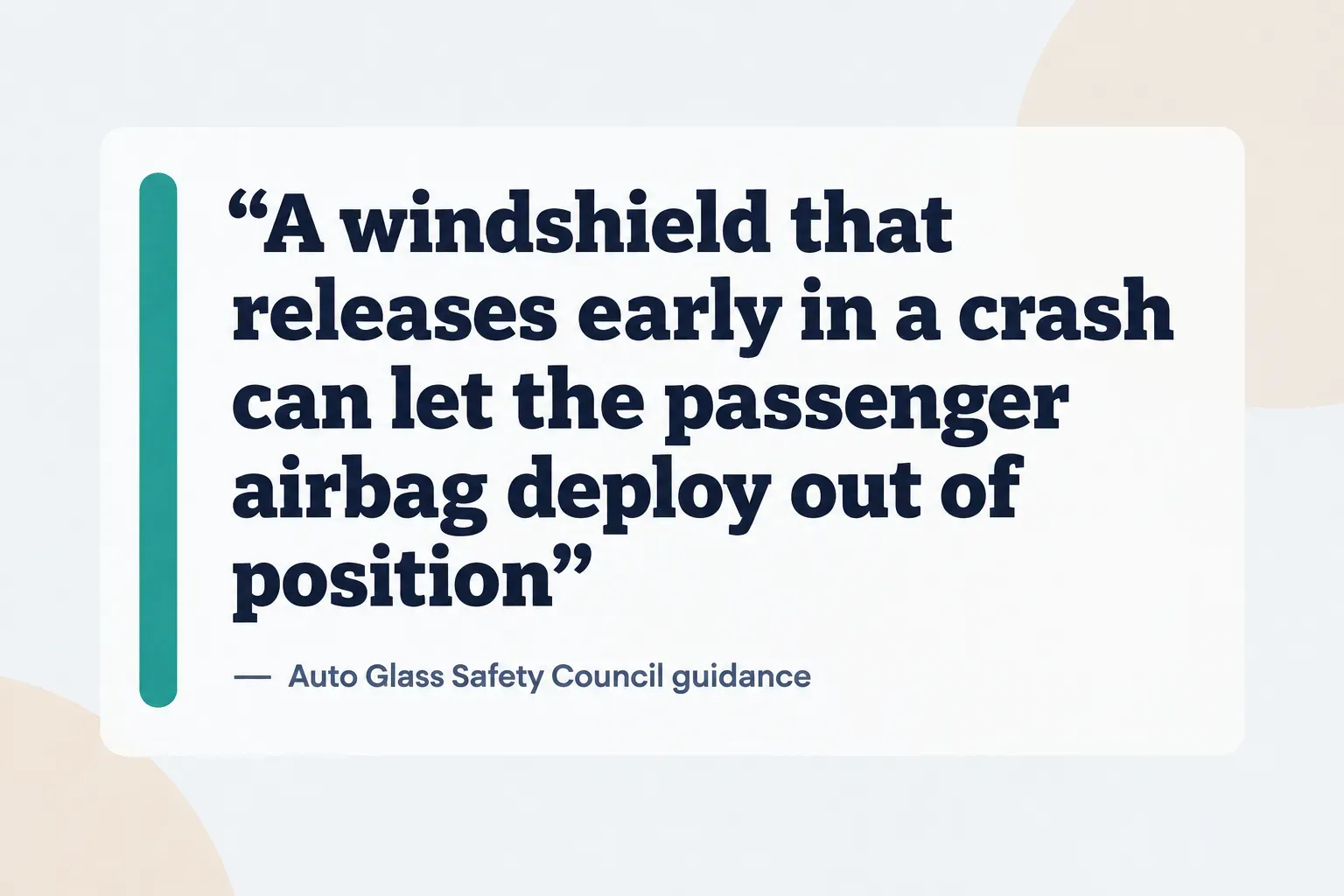
The passenger-side airbag deploys upward and bounces off the windshield to reach the occupant.
If the urethane hasn’t cured enough, the glass can pop out under that force, and the airbag deploys out of position.
Mobile installs run into trouble in these situations:
- Cold or wet weather: many urethanes cure slowly below about 40°F, and rain or high humidity can contaminate the bond line. A reputable tech will reschedule rather than install in a downpour.
- No calibration equipment on-site: most mobile vans can’t perform static calibration, which needs a level floor, controlled lighting, and precise target placement.
- Jobs that require a shop bay: vehicles needing static or combined calibration often have to visit the shop anyway, so mobile service may only save you half a trip.
- Tight spaces: crowded parking garages and steep driveways can make proper glass handling difficult, especially for large EV windshields.
After the install: What to check
Don’t drive away the moment the tech packs up. Spend five minutes checking the work, then keep an eye on it for the next few days.
- Wind noise: new whistling at highway speed usually means a gap in the seal or misaligned molding.
- Water leaks: after the cure time, check the headliner, A-pillars, and floor mats for dampness after rain or a car wash.
- Optical distortion: look through the glass at straight lines like poles or building edges. Waviness in your sightline is a reason to reject the glass.
- Loose trim: press along the molding and cowl panel to make sure nothing shifts or rattles.
- Dashboard warning lights: any new ADAS, lane-assist, or collision-warning light means something isn’t right.
- Camera error codes: test lane departure warning on a well-marked road. If it seems hesitant or overly aggressive, return for a calibration check.
- Calibration documentation: ask for the printed or digital calibration report. It’s your proof the work was done, and your insurer may want it.
The bottom line before you book
The decision is simpler than the pricing makes it look.
If the damage is small and outside your sightline, repair it now and pay $60 to $150.
If it’s large, spreading, or near the edge, replace the windshield, and budget for calibration if your car has a forward-facing camera.
Before you approve any work, get at least two itemized quotes.
Confirm in writing three things: the glass type and brand, whether ADAS calibration is included (and which method), and the safe drive-away time for the adhesive being used.
Then run your deductible math before deciding whether to file a claim.
And resist the urge to pick the cheapest number on the page.
The lowest quote often hides missing calibration or reused molding… and you won’t discover the gap until a warning light comes on or a leak stains your headliner.
Your windshield holds back the passenger airbag and gives your safety cameras their view of the road.
Choose the installer who does the job right, not just the one who does it cheap.
Frequently asked questions
How much should I expect to pay for a windshield replacement?
Most drivers pay between $250 and $500 for a basic windshield replacement in 2026, and $500 to $1,500 or more for vehicles with ADAS cameras or specialty glass. Features like a head-up display, acoustic interlayer, rain sensor, or heated wiper area push the price higher. Treat any figure as an estimate, since your exact cost depends on your vehicle, your glass choice, and local labor rates.
Is it cheaper to replace a windshield through insurance?
Insurance is cheaper only when your total replacement cost is higher than your deductible. If your quote is $450 and your deductible is $500, you'll pay the full amount either way, so paying cash avoids an unnecessary claim. A full-glass endorsement, where available, removes the deductible for glass entirely and often makes insurance the cheapest route.
Does full coverage insurance cover a cracked windshield?
Yes, "full coverage" typically includes comprehensive insurance, which covers windshields cracked by debris, hail, or vandalism. You'll still owe your deductible unless you have a zero-deductible glass endorsement or live in a state that requires insurers to waive it. If the crack happened during a collision, it's usually handled under collision coverage instead.
How do I know if my windshield can be repaired instead of replaced?
Your windshield can usually be repaired if the chip is smaller than a quarter or the crack is under three inches and sits outside the driver's direct line of sight. Replacement is typically required when damage reaches the edge, sits over the camera or rain sensor, or keeps spreading. When in doubt, have a technician inspect it quickly, because waiting often turns a $100 repair into a full replacement.
How much does ADAS calibration cost after windshield replacement?
ADAS calibration typically costs $150 to $400, with dealerships often charging at the higher end. Static calibration requires a shop bay, precise targets, and one to two hours of technician time. Dynamic calibration is done by driving the car on marked roads, which can be quicker but depends on weather and road conditions, and some vehicles require both.
How long after windshield replacement can I drive?
Most vehicles are safe to drive within 1 to 4 hours after windshield replacement, depending on the urethane adhesive and weather conditions. That's the safe drive-away time, when the bond is strong enough to support airbag deployment. Full cure takes about 24 hours, so avoid car washes, slamming doors, and rough roads during that first day.
Need a hand with something?
The Frendex map shows you who is available near you, in real time.
Get the app free Get the app freeFree, no card needed
Related articles
What your bumper repair shop isn't telling you
A $200 scratch can hide $2,000 in hidden damage. See what's behind the plastic, what drives repair costs, and how to vet a shop before you pay.
Is your car asking for a wheel alignment?
Learn the real symptoms of bad alignment vs tire balance or wear issues. See what a technician checks and how to read your shop report before paying.
How much does a locksmith cost in 2026?
See what locksmiths actually charge in 2026, trip fees, labor, and parts included. Real job costs and hidden add-ons before you book a call.